

sustainability
Recycled Felt from Textile Waste
How Tulsi Overseas turns recycled textile fibre into non-woven felt — and why it's a circular-economy material.
Tulsi Overseas ·
Where the “waste” actually comes from
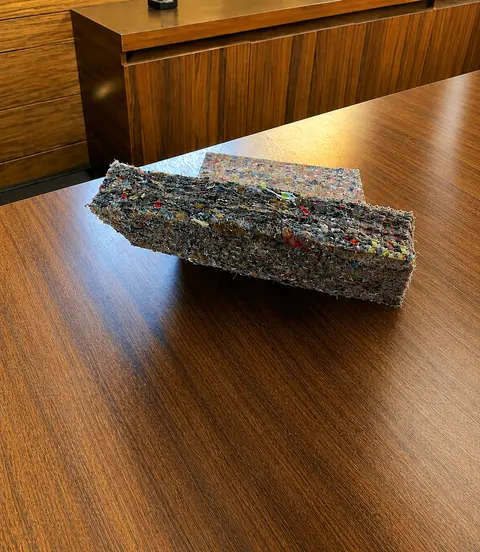
Two streams feed recycled felt production: post-industrial offcuts — the scraps left over when a textile or garment factory cuts fabric to pattern — and post-consumer textiles that have reached the end of their first life. Both would otherwise be baled for landfill or incineration; neither is virgin fibre grown or synthesised specifically for this purpose.
From bale to batt
The fibre arrives sorted by type and colour, then goes through the same needle-punch process used for virgin felt — barbed needles mechanically interlocking it, no chemical binder needed (see how needle-punch felt is made for the full process).
What recycling actually avoids
Textile waste that isn’t recycled has two endings: landfill, where synthetic fibres persist for a very long time, or incineration, which releases the carbon anyway. Turning it into felt does neither — it keeps the fibre in productive use for as long as the mattress or vehicle it ends up in lasts.
One process, two outcomes
The same fibre stream that goes into an automotive insulation part could just as easily have gone into a mattress layer — the process doesn’t care which industry the felt ends up in, only that the specification is met. Tulsi Overseas runs recycled fibre through this line for both mattress and automotive felt, made to your GSM and thickness — the same specification process as virgin-fibre felt, at lower cost, which is why it works at production scale, not just as a niche offering.
Frequently asked questions
- Is recycled felt as good as virgin-fibre felt?
- For insulation, padding and mattress layers, recycled needle-punch felt holds up well — the needle-punch process gives it strength and consistent density regardless of fibre source. Recycled fibre also makes it more sustainable and cost-effective.
- Does recycled felt come in consistent colour and quality batch to batch?
- Fibre is sorted and blended before carding specifically to even out colour and type, so batches run consistent — the same QC step used for virgin-fibre felt.